
When should a chest x-ray be used to evaluate acute-onset productive cough for adults?


FIGURE
When to order chest x-ray?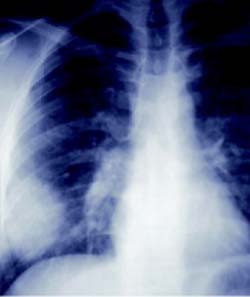
Clinical decision rules detected 59% of pneumonias, vs just 33% with physician judgment.
TABLE 1
Signs and symptoms significant for pneumonia
| FACTOR | SCORE |
|---|---|
| Rhinorrhea | –2 |
| Sore throat | –1 |
| Night sweats | 1 |
| Myalgias | 1 |
| All-day sputum production | 1 |
| Respiratory rate >25/min | 2 |
| Temperature ≥100° F | 2 |
| Adapted from Diehr et al, J Chronic Dis 1984.1 | |
TABLE 2
Distribution of point scores for pneumonia and non-pneumonia groups
| POINT SCORE | NUMBER WITH PNEUMONIA | NUMBER WITHOUT PNEUMONIA | PERCENTAGE WITH PNEUMONIA | CUMULATIVE SENSITIVITY | CUMULATIVE SPECIFICITY |
|---|---|---|---|---|---|
| –3 | 0 | 140 | 0 | 100 | 8 |
| –2 | 4 | 552 | 0.7 | 91 | 40 |
| –1 | 8 | 504 | 1.6 | 74 | 70 |
| 0 | 7 | 316 | 2.2 | 59 | 88 |
| 1 | 12 | 124 | 808 | 33 | 96 |
| 2 | 6 | 52 | 10.3 | 20 | 99 |
| 3 | 4 | 12 | 25.0 | 11 | 99 |
| 4 | 3 | 8 | 27.3 | 4 | 100 |
| 5 | 1 | 4 | 20.0 | 2 | 100 |
| 6 | 1 | 0 | 100.0 | 0 | 100 |
| Total | 46 | 1712 | 2.6 | ||
| Adapted from Diehr et al, J Chronic Dis 1984.1 | |||||
Recommendations from others
The Infectious Disease Society of America, the American Thoracic Society, the Canadian Infectious Disease Society and the Canadian Thoracic Society, and the Centers for Disease Control and Prevention all recommend a chest x-ray for patients for whom signs and symptoms suggest a pneumonia, but they do not give any guidance as to which signs and symptoms are significant.9-12 The British Thoracic Society does not recommend radiography for patients with suspected pneumonia among outpatients.13 The European Respiratory Society only recommends a chest x-ray for those patients with failure of first-time empirical therapy or focal chest signs; a chest x-ray may also be indicated for those who are aged ≥65 years, are institutionalized, are alcoholics, have possibly aspirated, have been hospitalized within the previous year for pneumonia, or have significant comorbidities.14


