
Total Hip Arthroplasty and Hemiarthroplasty: US National Trends in the Treatment of Femoral Neck Fractures


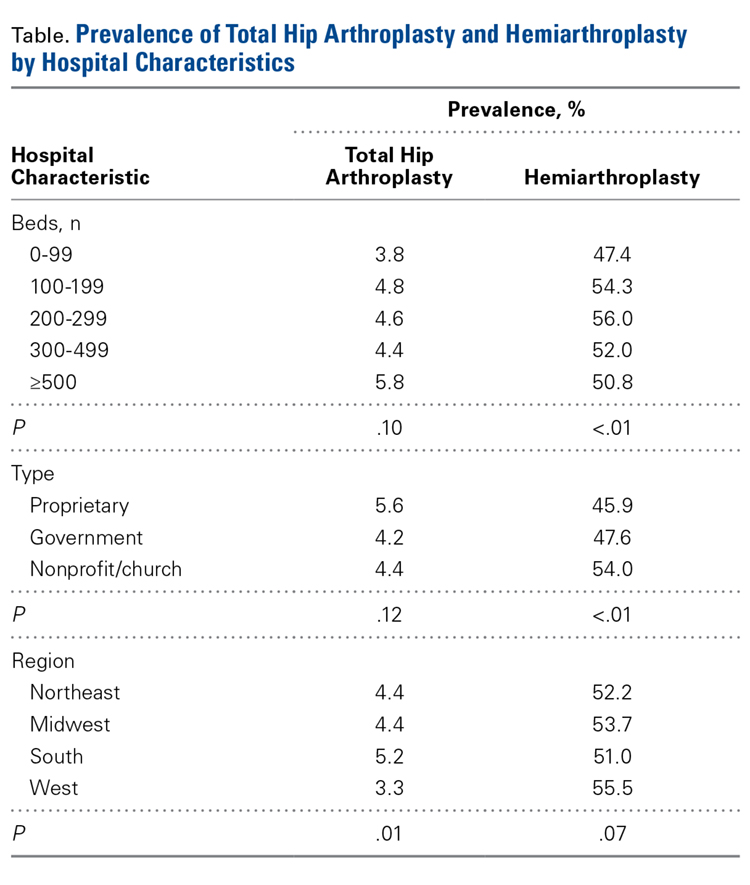
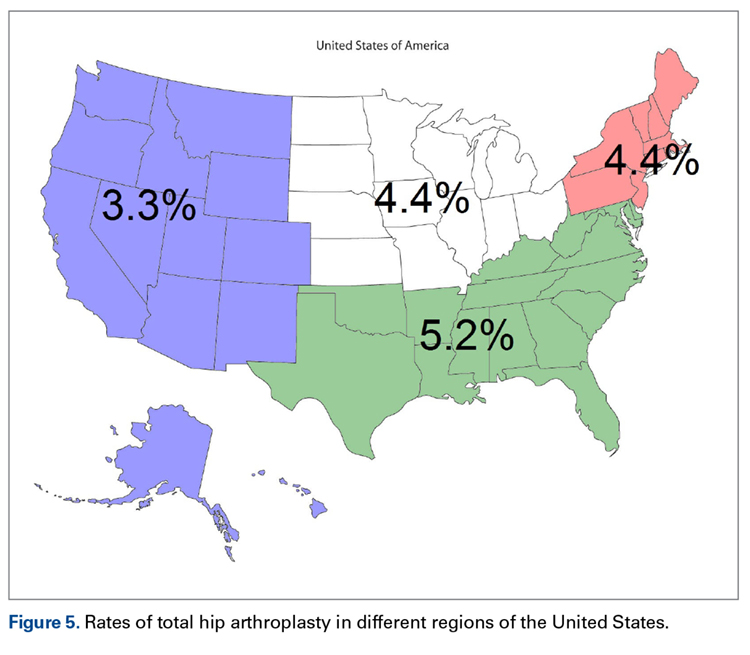
There is controversy regarding whether total hip arthroplasty (THA) or hemiarthroplasty (HA) is the treatment preferred for displaced intracapsular femoral neck fractures (FNFs). Using the US National Hospital Discharge Survey, we found that, of 12,757 patients admitted for FNF between 2001 and 2010, 4.6% underwent THA and 52.5% underwent HA. More of both procedures were performed over time. Mean age was higher for HA patients. Hospitalization duration and blood transfusion rates were higher for THA. There were region-based differences in frequency of THA and significant hospital-size-based differences in frequency of HA, possibly because of differences in regional training and subspecialist availability. In addition, a larger proportion of THA patients was covered by private insurance.
Trends were evaluated by linear regression with the Pearson correlation coefficient (r). Statistical comparisons were made using the Student t test for continuous data, and both the Fisher exact test and the χ2 test for categorical variables. Significance level was set at P < .05. All analyses were performed with IBM SPSS Statistics 22.
Results
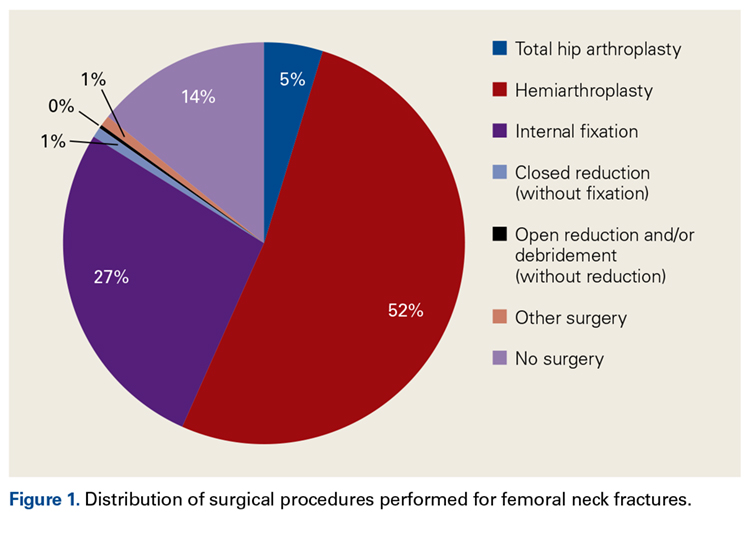
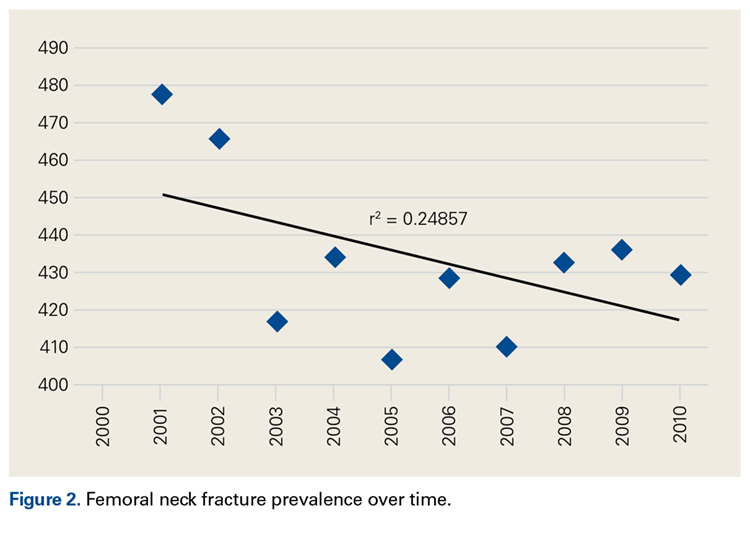
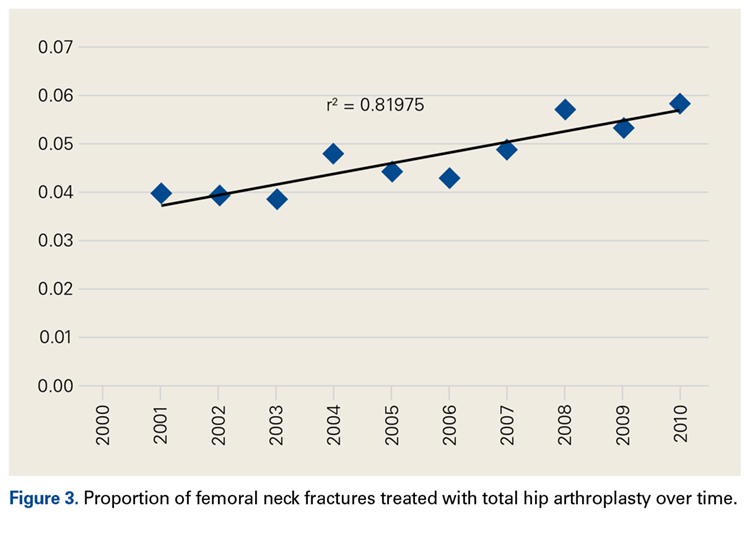
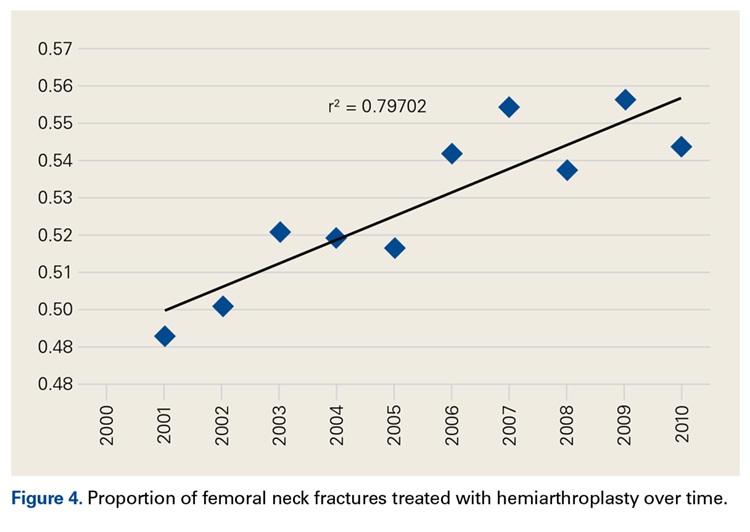
Hospital stay was longer (P < .01) for THA patients (7.7 days; range, 1-312 days) than for HA patients (6.7 days; range, 1-118 days), and blood transfusion rate was higher (P = .02) for THA patients (30.4%) than for HA patients (25.7%), but the groups did not differ in their rates of DVT (THA, 1.2%; HA, 0.80%, P = .50), PE (THA, 0.52%; HA, 0.72%, P = .52), or mortality (THA, 1.8%; HA, 2.9%; P = .16). Discharge disposition varied with surgical status (P < .01): 23.2% of THA patients and 11.6% of HA patients were discharged directly home after their inpatient stay, and 76.8% of THA patients and 88.4% of HA patients were discharged or transferred to a short- or long-term care facility.
Private medical insurance provided coverage for 14.3% of THAs and 9.1% of HAs, and Medicare provided coverage for 80.9% of THAs and 86.0% of HAs (P < .01).


