
The Obesity Problem in U.S. Hospitals


Costly Solutions
Rising costs of caring for obese patients results in increased costs for everybody. The Centers for Disease Control estimates that the cost of caring for an overweight or obese patient is an average of 37% more than the cost of caring for a person of normal weight. This adds an average of $732 annually to the medical bill of every patient.8
In an effort to provide quality medical care to larger patients, many hospitals must purchase specialized equipment and supplies. There are hundreds of products available designed to help facilitate medical care of obese patients. Some hospitals are investing a great deal of money in caring for obese individuals, from lifting and moving equipment such as stretchers, wheelchairs, and lifts, to furniture such as beds and chairs, to medical equipment, including blood pressure cuffs, longer needles, and retractors.
Some facilities are making structural changes, such as widening doorways and hallways, to accommodate the passage of the larger equipment loaded with the larger patient. The 2004 Novation survey reported the mean estimated cost of new supplies to be $43,015. The mean cost of renovations in 2004 was $22,000 (compared with $15,250 in 2003).7
Conclusion
There is no doubt that the treatment of obese patients presents unique, sometimes expensive, challenges to hospitals and hospitalists. Hospitals have a responsibility to have the necessary diagnostic and treatment equipment available. Hospitalists have a responsibility to be familiar with the ways they can modify existing procedures and techniques to achieve a more desirable outcome in the obese patient. Above all, every effort must be expended to ensure that the obese patient is given the same respect and the same quality of care as every other patient. TH
Sheri Polley is based in Pennsylvania.
References
- Weight Loss & Obesity Resource Center. Medical Care for Obese Patients. Available at: https://weightlossobesity.com/obesity/medical-care-for-obese-patients.html. Last accessed May 17, 2006.
- Weight Control Information Network. Medical Care for Obese Patients. Available at: https://win.niddk.nih.gov/publications/medical.htm. Last accessed May 17, 2006.
- Brunette DD. Resuscitation of the morbidly obese patient. Am J Emerg Med. 2004 Jan;22(1):40-47.
- Criqui MH. Obesity, risk factors, and predicting cardiovascular events. Circulation. 2005 Apr 19;111 (15):1869-1870. Available online at: https://circ.ahajournals.org/cgi/content/full/111/15/1869. Last accessed May 17, 2006.
- New York Office for the Aging 2001–2004. Overweight & Obesity. Available at: www.agingwell.state.ny.us/prevention/overweight.htm. Last accessed May 22, 2006.
- Medical News Today. Is obesity a risk factor for asthma? Available at: www.medicalnewstoday.com/medicalnews.php?newsid=24118. Last accessed May 17, 2006.
- VHA. 2004 obese patient care survey market research report. Available at: www.vha.com/portal/server.pt/gateway/PTARGS_0_2_1534_234_0_43/http%3B/remote.vha.com/public/research/docs/obestpatientcare.pdf. Last accessed May 6, 2006.
- Akridge J. Bariatrics products help hospitals serve growing market. Healthcare Purchasing News. 2004 Mar. Available at: www.highbeam.com/library/docfree.asp?DOCID=1G1:124790587&num=1&ctrlInfo=Round20%3AMode20a%3ASR%3AResult&ao=&FreePremium=BOTH&tab=lib. Last accessed July19, 2006.
Classic Literature
1903 Article Introduces Early Electrocardiogram
By Jamie Newman, MD FACP
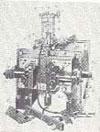
Einthoven W. The galvanometric registration of the Human Electrocardiogram, likewise a review of the use of the capillary electrometer in physiology. Pfluger’s Arch.1903;99:472-480.
This landmark article represents one of the greatest achievements in the diagnosis of diseases of the heart. In tandem with the work of Werner Forssman and the first cardiac catheterization, it is the basis for modern cardiology.
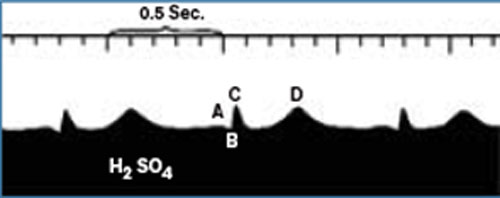
Willem Einthoven was Dutch and served as the chair of physiology and histology at the University of Leiden, the Netherlands, for four decades. He based his work on the prior efforts of Luigi Galvani, Carlo Matteucci, and—most importantly—A.D. Waller, who showed that “leads” placed externally could measure the electric activity of the heart, using a capillary electrometer. (See Figure 1.) This device used a column of mercury, which responded to electric current but was inexact and not clinically useful.
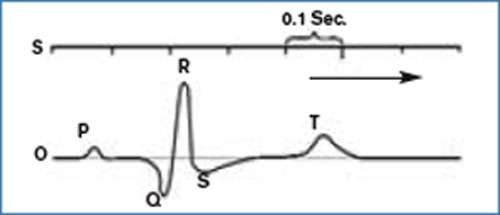
In 1903, Einthoven used a galvanometer to measure this current. In this article he describes the physical principles of the electrocardiogram, as well as some early tracings. (See Figure 2.)
In 1924, he was awarded the Nobel Prize in physiology or medicine.

