
Management of Isolated Greater Tuberosity Fractures: A Systematic Review


As isolated fractures of the greater tuberosity present a therapeutic challenge, we systematically reviewed all studies of greater tuberosity fracture management. Inclusion criteria were level I to IV evidence and 2-year follow-up. Thirteen studies and 429 shoulders were included in our analyses, which compared 3 paired groups: treatment type (nonoperative vs operative), fracture displacement amount (<5 mm vs >5 mm), and surgery type (open vs arthroscopic).
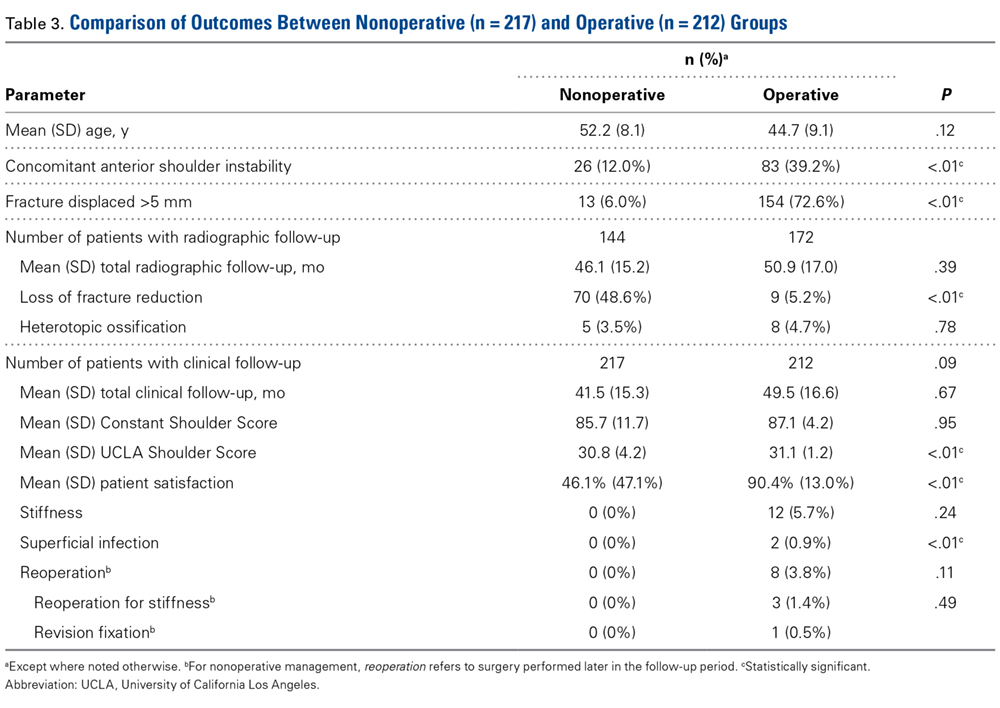
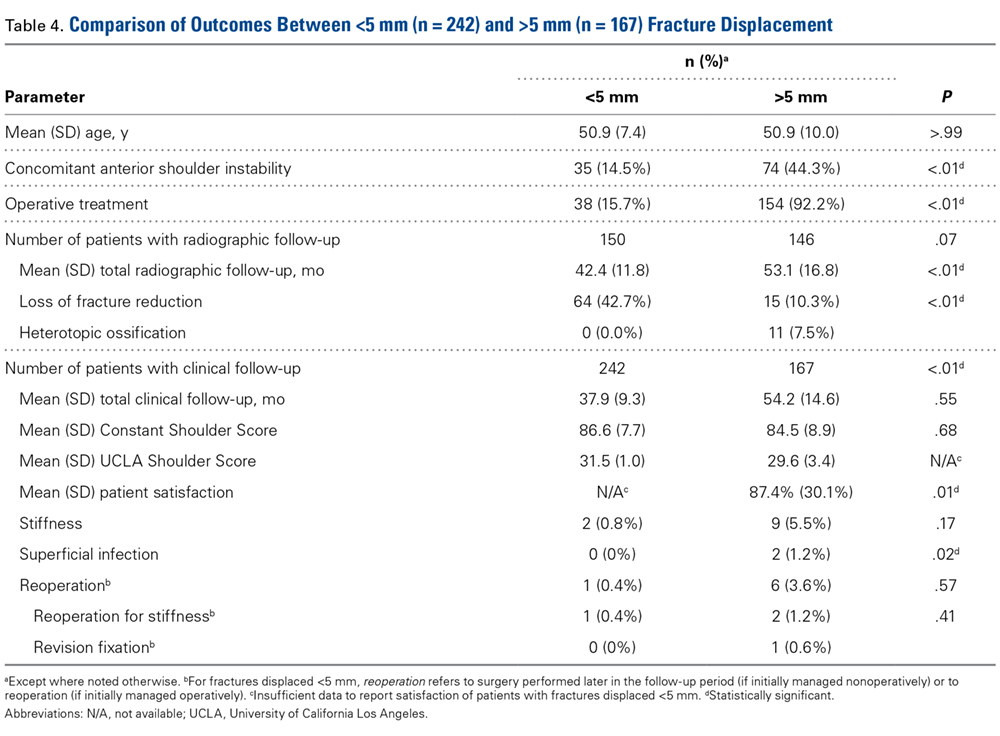
Concomitant anterior glenohumeral instability was documented in 28.1% of patients and was significantly more common in displaced vs nondisplaced fractures (44.3% vs 14.5%; P < .01). Compared with nonoperative patients, operative patients had significantly fewer radiographic losses of reduction (48.6% vs 5.2%; P < .01) but increased shoulder stiffness (0.0% vs 5.7%; P < .01). Heterotopic ossification was more common in displaced vs nondisplaced fractures (7.5% vs 0.0%; P < .01). There were no significant differences in outcome between arthroscopic and open surgery, but with screw fixation (vs suture constructs) there were significantly fewer cases of stiffness (0% vs 12.0%; P < .01) and reoperation (0% vs 8.0%; P = .051).
Surgery for displaced fractures is associated with high patient satisfaction and low rates of complications and reoperations, regardless of technique and fixation mode.

Fisher exact tests were used to perform isolated comparisons of screws and sutures as well as suture anchors and transosseous tunnels. Patients with screw fixation were significantly (P = .051) less likely to require reoperation (0/56; 0%) than patients with suture fixation (8/100; 8.0%). Screw fixation also led to significantly less stiffness (0% vs 12.0%; P < .01) but trended toward a higher rate of superficial infection (3.6% vs 0%; P = .13). There was no statistical difference in nerve injury rates between screws and sutures (1.8% vs 3.0%; P = 1.0). There were no significant differences in reoperations, stiffness, superficial infections, or nerve injuries between suture anchor and transosseous tunnel constructs.


