
Joint-Preserving Osteotomies for Isolated Patellofemoral Osteoarthritis: Alternatives to Arthroplasty


Patellofemoral osteotomies can provide excellent symptomatic relief for selected patients with isolated patellofemoral osteoarthritis (PFOA). Isolated PFOA is a relatively common disorder, seen in 24% of women and 11% of men over the age of 55 years. In up to 89% of these patients, PFOA occurs at the lateral facet of the patella, and is especially amenable to surgical treatment. Particularly in younger patients, joint-preserving osteotomies can provide excellent and reliable relief while delaying the need for partial or joint arthroplasty and subsequent revision. These osteotomies, such as partial lateral patellar facetectomy (PLPF), patella-thinning osteotomy (PTO), tibial tubercle anteromedialization (AMZ) osteotomy, and sulcus-deepening trochleoplasty (SDT), are reviewed for indications, technique, and results. In particular, patients with primarily lateral facet or distal and lateral lesions have excellent outcomes with patellofemoral osteotomies.
Sulcus-Deepening Trochleoplasty
High-grade trochlear dysplasia with a prominence, frequently present in lateral patellar instability, is thought to correlate with PFOA because it produces an anti-Maquet effect.24 The dysplasia provokes an increment of the patellofemoral joint pressure that could explain patellofemoral chondropathy and ultimately PFOA. In fact, 33% of patients with isolated PFOA have a history of objective patellar dislocation.24 In these cases, SDT could be considered. Several studies have examined use of this technique in the treatment of instability, but not PFOA.25 After SDT, pain resolves despite the chondral lesions being left alone (Figures 7A, 7B). 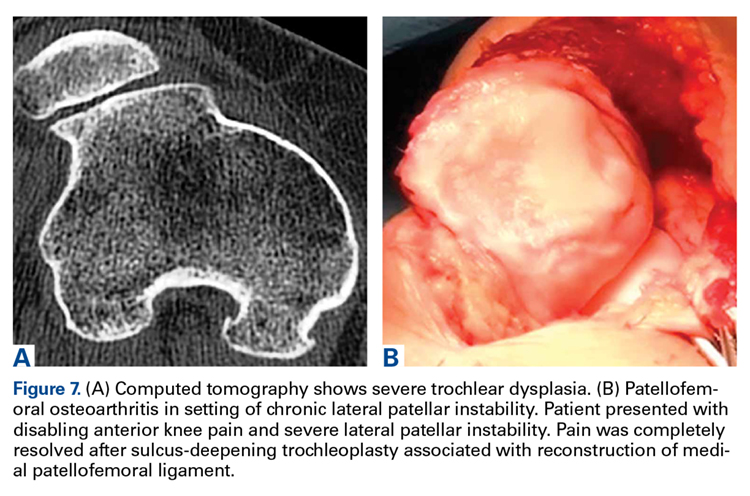
Conclusion
Patellofemoral joint replacement is an option for patellofemoral pain only in very select cases. Preserving the joint is always a primary goal. As not all PFOA cases are equal, joint-preserving surgery must be tailored to the patient. The keys to success are good indication, precise surgery, proper rehabilitation, and, above all, doing only what is needed.
Am J Orthop. 2017;46(3):139-145. Copyright Frontline Medical Communications Inc. 2017. All rights reserved.


