
ADVERTISEMENT

Clinical Challenges - December 2017 What's your diagnosis?

The diagnosis


Answer: Hydrogen peroxide ingestion causing significant portal venous gas and stomach wall thickening


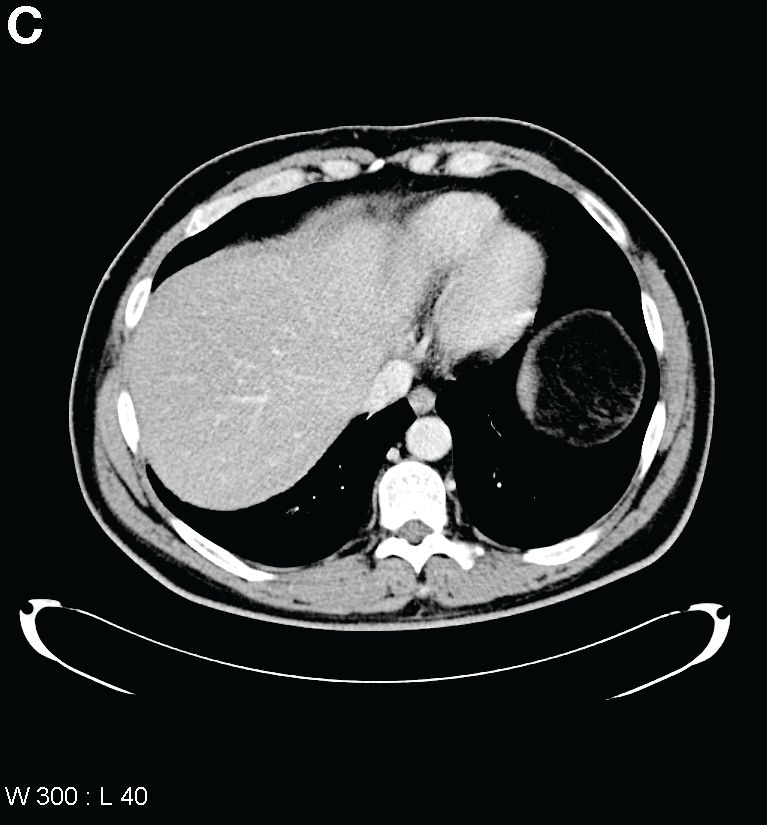
Upon further questioning, it was found that the patient accidentally ingested approximately 50 mL of concentrated 35% hydrogen peroxide (H2O2) solution, which he was using in diluted form as a naturopathic treatment for his diabetes mellitus. He was admitted to our institution and closely monitored for evidence of perforation and respiratory distress. Given the extent of portal venous gas, he was promptly treated with hyperbaric oxygen to prevent cerebral gas embolism. Clinically, he remained stable over the next 24 hours and repeat imaging the next day revealed dramatic improvement of the portal venous gas (Figure C). He was discharged on day 4 of hospitalization with no obvious clinical sequelae. Outpatient gastroscopy was arranged to assess any further potential damage, but he was lost to follow-up.

AGA Institute
Fig C
H2O2 is a commonly used naturopathic remedy that is claimed to treat a diverse array of conditions from diabetes mellitus, to cancer, to HIV.1 Concentrations vary from 3% solutions found in disinfectants to 35% solutions commonly found in health food stores. Injury is thought to occur via three mechanisms: Caustic injury, oxygen gas formation, and lipid peroxidation.1 Treatment is primarily supportive as H2O2 rapidly decomposes to water and oxygen gas. Owing to the risk of cerebral gas embolism, 100% oxygen or hyperbaric oxygen therapy has been suggested to prevent brain infarction.2 A review of hyperbaric oxygen in 11 cases of portal venous gas from H2O2, comprising accidental ingestion in 10 and therapeutic misadventure in 1, found it successfully resolved all portal gas in 9 patients and nearly all in 2. Concentrations of H2O2 were 35% in 10 patients and 12% in 1. Time to hyperbaric oxygen ranged from 2 to 6.5 hours. Ten patients were discharged within 1 day, and 1 patient at 3.5 days.2 Endoscopy is suggested for persistent hematemesis, intractable vomiting, or significant oral burns.1 However, because of the rarity of this condition, the diffuse nature of tissue injury, and the usually favorable outcome after hyperbaric oxygen, the precise role of this intervention remains undefined.

References

1. Watt, B.E., Proudfoot, A.T., Vale, J.A. Hydrogen peroxide poisoning. Toxicol Rev. 2004;23:51-7.
2. French, L.K., Horowitz, B.Z., McKeown, N.J. Hydrogen peroxide ingestion associated with portal venous gas and treatment with hyperbaric oxygen: a case series and review of the literature. Clin Toxicol. 2010;48:533-8.

ginews@gastro.org